


Many Floridians have heard of the “14-day rule,” but very few understand what it actually requires—or how quickly it can affect their rights after a crash. The rule is part of Florida’s Personal Injury Protection (PIP) system, and it governs how soon you must seek medical care to qualify for benefits.
If you’re navigating the aftermath of an accident, understanding this rule can help you protect your health and your financial recovery. For a broader look at how injury claims work in Florida, see our guide to Florida injury claim requirements.
What the 14-Day Rule Requires
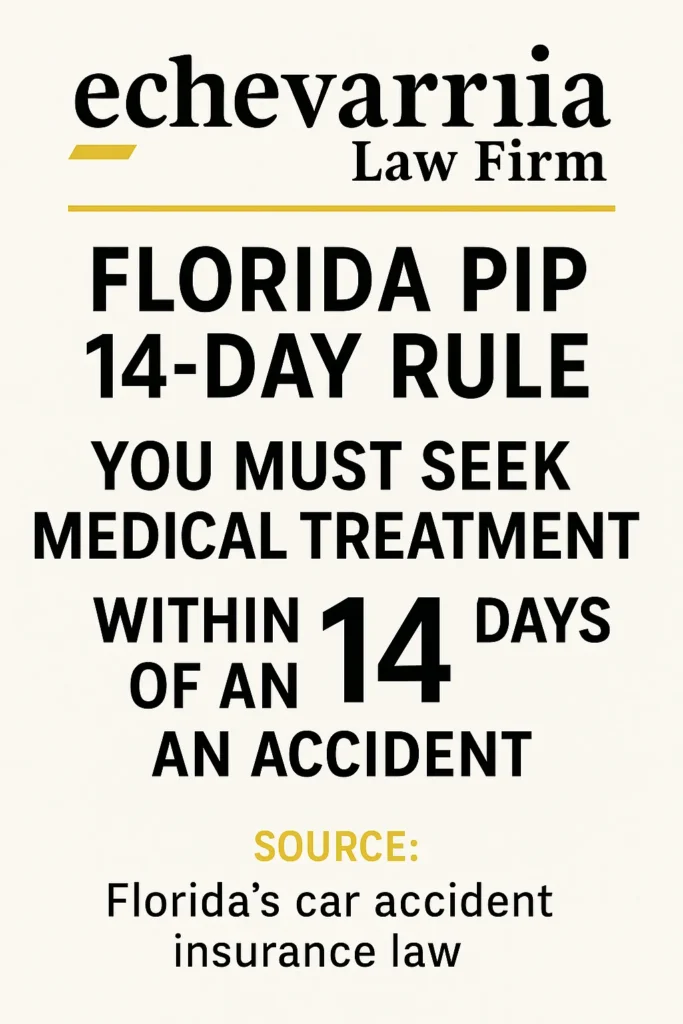
Under Florida’s PIP law, you must receive initial medical treatment within 14 days of a motor-vehicle crash to qualify for PIP benefits.
PIP is Florida’s no-fault system, meaning your own insurance covers certain medical bills and lost wages regardless of who caused the accident. But coverage only applies if you meet the 14-day medical requirement.
A few key points:
- The clock starts on the day of the accident.
- Treatment must be from a qualified medical provider (explained below).
- Even if you feel “fine,” a delay can permanently limit your access to benefits.
This rule exists to ensure injuries are documented promptly and to reduce fraudulent or late-reported claims.
What Counts as “Initial Medical Services”
Florida law is fairly flexible about where you receive your first treatment, as long as the provider is recognized under the statute. Acceptable forms of initial medical care include:
- Emergency rooms
- Urgent care centers
- Primary care physicians
- Chiropractors
- Licensed paramedics or EMTs (as part of emergency response)
- Walk-in clinics with authorized medical providers
The treatment does not have to be extensive. Even a medical evaluation that documents symptoms can satisfy the rule.
Many people in Miami rely on local Miami resources like urgent care clinics or hospital ERs, which are all valid options as long as you are evaluated by a qualifying provider.
How Missing the Deadline Affects Your Claim
If you do not receive medical treatment within 14 days, your PIP insurer can:
- Deny all PIP medical benefits, even if you were clearly injured
- Challenge later treatment as unrelated or “non-acute”
- Argue that the lack of early care undermines your credibility
Missing the deadline does not prevent you from pursuing a personal injury claim against an at-fault driver, but it can significantly increase your out-of-pocket costs early in the case.
Preserving access to PIP benefits helps reduce financial pressure while your attorney builds the liability claim.
Why Immediate Treatment Helps Document Injuries
Beyond the legal requirement, early treatment protects your health. Many crash-related injuries—whiplash, concussions, internal injuries, spine trauma—may not show symptoms for hours or days.
Prompt care helps:
- Identify hidden or delayed-onset injuries
- Create clear medical documentation linking your injuries to the crash
- Strengthen your attorney’s ability to negotiate with insurers
- Prevent insurance adjusters from claiming you were “not really hurt”
From a claims perspective, medical records created on day one often carry more weight than recollections weeks later.
Common Misunderstandings About Florida PIP
Floridians often hear conflicting information about PIP. Here are some issues that cause unnecessary confusion:
- “If the accident was minor, I don’t need to see a doctor.”
Even low-speed collisions can cause serious injuries. Failing to get checked can jeopardize coverage. - “My primary doctor can see me whenever they’re available.”
Many primary care offices cannot accommodate urgent visits, making urgent care or ER treatment safer for meeting the deadline. - “I can just wait to see if I feel worse.”
Waiting risks both your health and eligibility for benefits. - “PIP pays everything.”
PIP is limited and does not replace a full personal injury claim for long-term or serious injuries.
If any part of your situation is unclear, an attorney can explain your rights and ensure deadlines aren’t missed.
Ready to Understand Your Options?
If you’re unsure whether you met the 14-day requirement—or you need help navigating treatment, insurance, or next steps—we’re here to provide clarity.
Contact us here: Echevarria Law Firm Contact Page.
You don’t have to figure this out alone, and a calm conversation can help you understand what comes next.