

Rideshare collisions often leave people confused about who is actually responsible. Unlike a typical car accident, an Uber or Lyft crash involves additional layers—company policies, driver app status, and competing insurance carriers. Sorting through these details can feel overwhelming when you’re already dealing with injuries. So, who is at fault in rideshare accidents?
This guide breaks down how fault is determined in the most common rideshare scenarios so you know what to expect and what information matters most. If you need help understanding a specific Uber or Lyft situation, our rideshare accident resources can provide additional clarity.
When the Rideshare Driver Is at Fault
A rideshare driver may be fully or partially at fault if they:
- Speed, tailgate, or drive aggressively
- Get distracted while using the app or their phone
- Fail to yield or run a red light
- Drive fatigued during long shifts
If the driver caused the crash while the app was on, Uber or Lyft’s insurance coverage may apply. The level of coverage depends on whether the driver was waiting for a ride, en route to pick someone up, or actively transporting a passenger.
When the app is off, the driver’s personal insurance policy applies the same way it would in any standard car accident.
For broader context on roadway liability, you can review Florida crash liability rules.
When Another Driver Is Responsible
Sometimes the rideshare driver is doing everything right, and another motorist causes the collision. In those cases, the at-fault driver’s insurance company is primarily responsible for damages.
Examples include:
- A driver rear-ends the rideshare vehicle
- A speeding driver loses control and strikes the rideshare
- A distracted driver makes an improper turn or lane change
Even when another driver is to blame, Uber or Lyft’s insurance can provide backup coverage if the at-fault driver is uninsured or underinsured—and depending on the trip status at the time.
Multi-Vehicle and Chain-Reaction Scenarios
Liability becomes more complex when multiple cars are involved. Chain-reaction crashes may include several negligent drivers, and insurance companies often argue over which impact caused which injuries.
Key questions attorneys analyze in these cases include:
- Which vehicle made the first improper move?
- Did any driver fail to keep a safe following distance?
- Were sudden stops unavoidable or predictable?
- How do the vehicle positions and damage patterns align with each driver’s story?
Multi-vehicle rideshare accidents take longer to resolve because each insurer conducts its own investigation. Witness statements, crash reports, and video evidence carry significant weight in clarifying fault.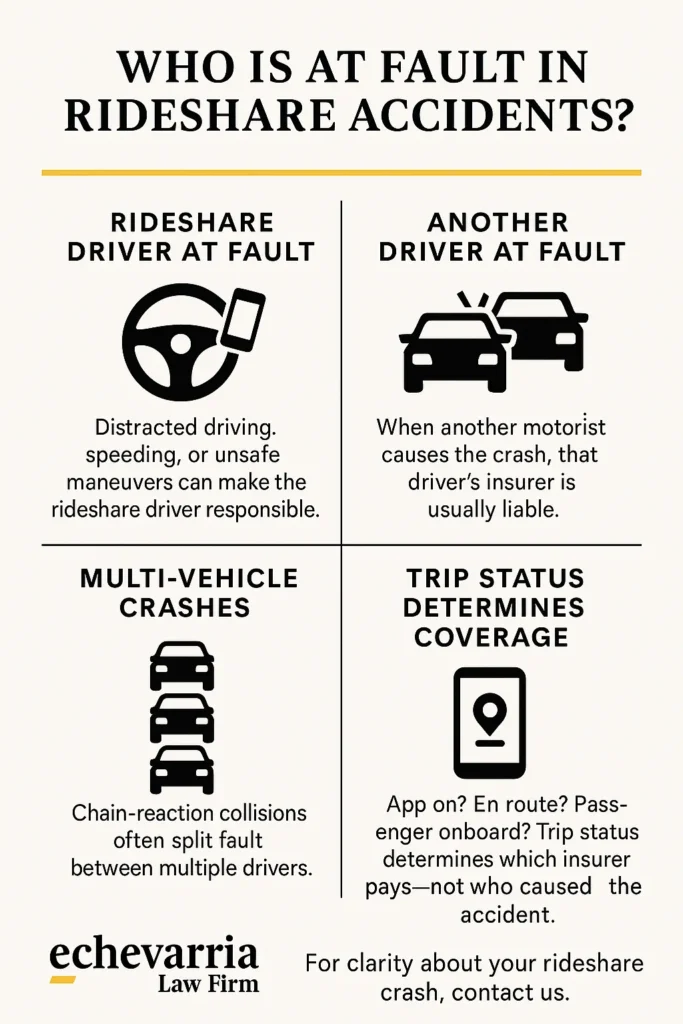
How Trip Status Affects Insurance Coverage
Uber and Lyft divide coverage into three “periods,” which influence how claims are handled—but they do not determine fault. Trip status affects which insurer pays, not who caused the crash.
Period 0 – App Off
- Driver is offline
- Only personal auto insurance applies
Period 1 – App On, Waiting for Ride
- Limited liability coverage through Uber/Lyft becomes active
- The rideshare company’s policy may step in for third-party injuries
Period 2 – En Route to Pick Up a Passenger
- Higher liability limits apply
Period 3 – Passenger in the Vehicle
- Full commercial-level coverage applies
Understanding these periods helps determine which insurance policy pays—but fault still depends on who acted negligently.
What Evidence Helps Establish Fault
Evidence often makes or breaks a rideshare accident claim. Helpful forms of proof include:
- App activity logs showing trip status
- Dashcam or surveillance footage
- Photos of vehicle damage and roadway conditions
- Police reports and witness statements
- Phone records if distraction is suspected
- Vehicle “black box” or telematics data
Because rideshare cases involve multiple insurers, preserving evidence early is critical. The more documentation available, the harder it is for any carrier to shift blame or minimize responsibility.
Need Clarity on Who’s at Fault in Your Rideshare Crash?
Whether you were a passenger, a rideshare driver, or another motorist, determining fault in an Uber or Lyft accident can quickly become complicated. For calm, clear guidance, you can reach our team anytime through our contact page.
We can explain how liability applies in your situation and what steps can protect your claim.