

In Miami, slip and fall accidents don’t usually happen because someone isn’t paying attention. They happen because certain places create the same dangerous conditions over and over again—wet surfaces that never fully dry, crowded walkways that hide hazards, and uneven pavement people are forced to walk across every day.
That’s why Miami slip and fall hotspots tend to look familiar. Resorts, retail centers, and busy pedestrian areas all share patterns that make falls more likely, especially in a city shaped by rain, humidity, tourism, and constant foot traffic.
This guide looks at where slip and fall accidents happen most often in Miami, why these locations are risky, and what matters if you’re injured on someone else’s property.
Common Property Conditions That Lead to Falls
Slip and fall accidents are rarely random. In most cases, they trace back to conditions property owners know—or should know—create risk.
In Miami, some hazards show up again and again:
- Wet or slick surfaces, especially near entrances, pools, and restrooms
- Poor drainage, where rainwater collects and lingers
- Uneven flooring or pavement, including cracked sidewalks and loose tiles
- Inadequate lighting, making hazards harder to see
- Crowded walkways, where spills or obstacles go unnoticed
Humidity and frequent rain make these problems worse. When surfaces stay damp longer than expected, even careful people can lose their footing without warning.
These incidents often fall under slip and fall claims, where the focus is on whether a property was kept reasonably safe for visitors.
High-Risk Locations in Miami: Resorts, Retail, and Sidewalks
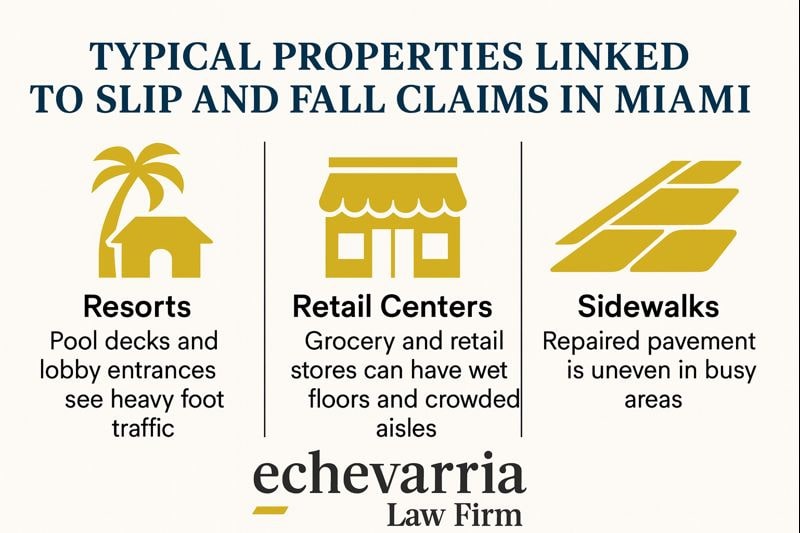
Some places in Miami see more slip and fall injuries simply because of how they’re used—and how much traffic they handle.
Resorts and hotels are common hotspots. Pool decks, outdoor walkways, and lobby entrances are constantly exposed to water, sunscreen, and foot traffic. When mats aren’t placed correctly or surfaces aren’t treated, falls happen fast.
Retail centers and grocery stores pose different risks. Spills, recently mopped floors, and crowded aisles can create hazards that are easy to miss, especially when shoppers are focused on carts or checkout lines.
Sidewalks and pedestrian areas present their own dangers. Cracked concrete, uneven pavers, and poor maintenance are common in busy areas where thousands of people walk daily. Tourists, commuters, and residents all rely on these paths, often without safer alternatives.
In each of these locations, the issue isn’t just that a fall occurred—it’s whether the property was reasonably maintained given how it’s used.
What Makes a Premises Liability Claim Strong
Not every fall leads to a valid claim. What matters is whether the property owner failed to take reasonable steps to prevent a known or foreseeable hazard.
Strong premises cases often involve factors like:
- A dangerous condition that existed long enough to be addressed
- Lack of warning signs or barriers
- Poor maintenance or repair practices
- Prior complaints or repeated incidents
These cases rely heavily on evidence: photos, incident reports, witness statements, and medical records. They’re also guided by property safety standards that require owners to keep spaces reasonably safe for the people they invite in.
The focus is less on the fall itself and more on what should have been done to prevent it.
What to Do After a Slip and Fall at One of These Spots
After a slip and fall, people often feel embarrassed or unsure whether it’s “serious enough” to report. That hesitation can make things harder later.
If you’re injured, important steps include:
- Reporting the incident to management and requesting a written report
- Taking photos of the area before conditions change
- Getting names of witnesses, if anyone saw the fall
- Seeking medical care, even if injuries don’t seem severe right away
Falls can cause injuries that worsen over time, especially to the back, hips, knees, and head. Early documentation helps protect both your health and your ability to understand your options later.
Getting Guidance After a Slip and Fall Injury
Slip and fall accidents in Miami are common—but the circumstances behind them matter. Whether the injury happened at a resort, store, or sidewalk, clarity about what went wrong can make a real difference.
If you were hurt and have questions about next steps, insurance, or whether the property should have addressed the hazard, getting calm guidance early can help you make informed decisions.
If you’d like straightforward answers, you can call (303) 707-3991 or contact us to talk through what happened and understand your options.
Frequently Asked Questions About Miami Slip and Fall Accidents
Where do slip and fall accidents happen most often in Miami?
Slip and fall injuries commonly occur at resorts, hotels, grocery stores, shopping centers, and on busy sidewalks. These locations see heavy foot traffic and are more likely to have wet surfaces, uneven flooring, or maintenance issues that increase fall risk.
Is a property owner always responsible for a slip and fall?
Not automatically. A claim depends on whether the property owner failed to fix or warn about a dangerous condition they knew—or should have known—about. The focus is on reasonable maintenance, not perfection.
What if the floor was wet because of rain?
Rain alone doesn’t excuse unsafe conditions. In a city like Miami, property owners are expected to anticipate wet conditions and take steps such as placing mats, warning signs, or improving drainage when floors become slippery.
Do I still have a claim if I didn’t fall right away?
Yes. Many people continue walking after a fall or don’t realize they’re seriously injured until hours or days later. What matters is documenting where and how the fall occurred and seeking medical care once symptoms appear.
What if the property says the fall was my fault?
Property owners and insurers often argue that a person “should have seen” the hazard. Fault isn’t decided by embarrassment or assumptions—it’s based on whether the property was reasonably safe and properly maintained.