


After an accident, the questions don’t come all at once. They show up slowly—between medical appointments, missed workdays, and phone calls from insurance adjusters. One of the biggest questions most people wrestle with is whether hiring a personal injury attorney is actually worth it.
Not every situation requires a lawyer. But many people don’t realize when legal help truly makes a difference—and when trying to handle things alone can quietly cost them far more than they expect.
This guide walks through the decision clearly, calmly, and without pressure.
Why People Hesitate to Hire a Personal Injury Attorney
Most hesitation has nothing to do with the strength of a case. It comes from understandable concerns.
People worry about:
- Legal fees and cost
- Making the situation feel adversarial
- Whether the insurance company will “do the right thing”
- The stress of dealing with a lawsuit
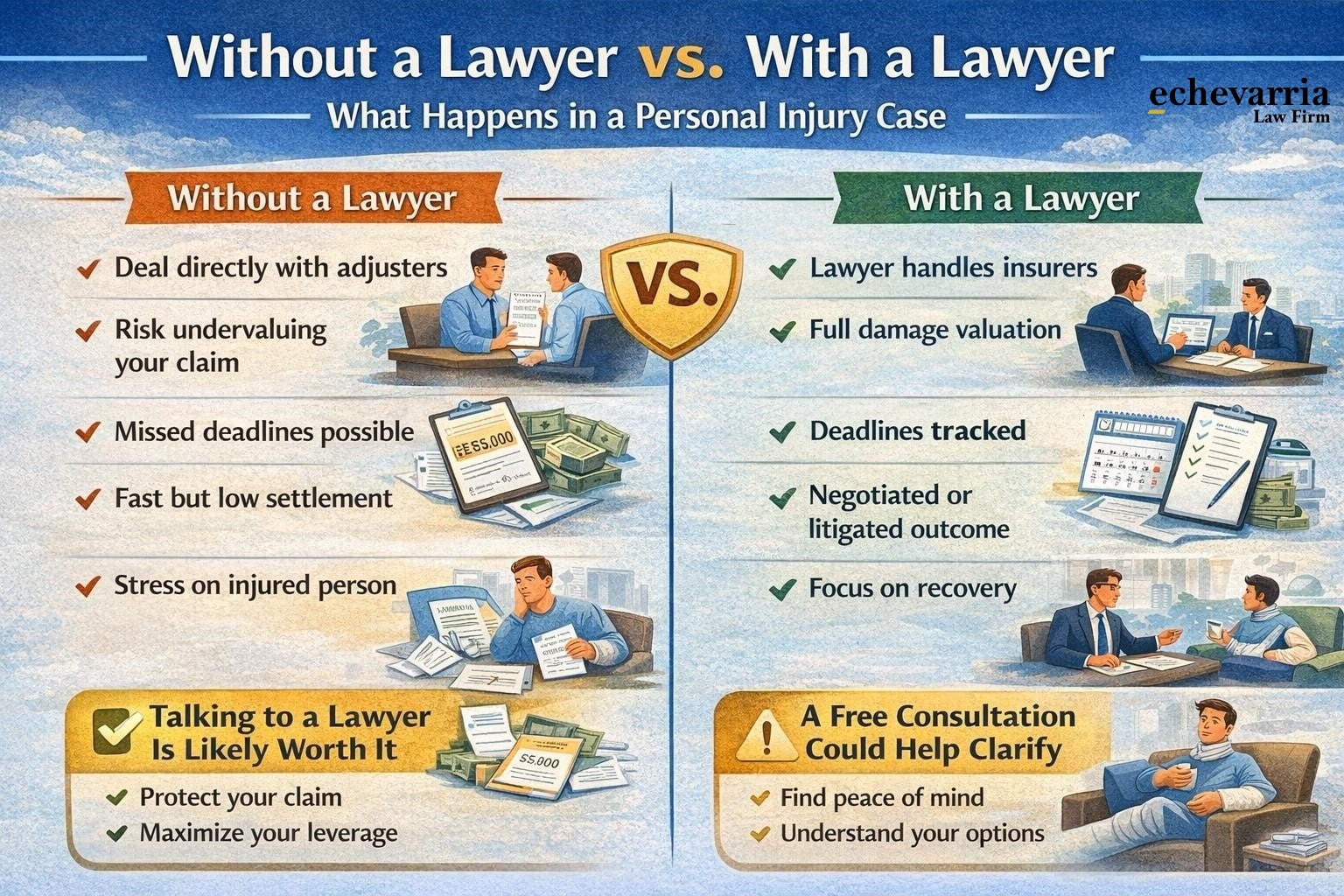
These concerns are reasonable. The problem is that personal injury claims aren’t decided by fairness—they’re shaped by documentation, deadlines, leverage, and negotiation. That’s where many unrepresented claims lose value without the person ever realizing it.
What a Personal Injury Attorney Actually Does for Your Case
A personal injury attorney’s role goes far beyond filing paperwork or showing up in court.
In practical terms, an experienced lawyer helps by:
- Identifying all available sources of compensation, not just the obvious one
- Protecting you from recorded statements and premature settlement offers
- Gathering and preserving medical and accident evidence
- Accurately valuing long-term injuries, lost income, and future care
- Handling insurance negotiations so pressure isn’t placed on you
Most importantly, a lawyer prevents mistakes that can’t be undone—missed deadlines, poorly worded statements, or accepting settlements that fall short of covering future needs.
This is especially true in cases involving serious injuries or multiple parties, which is why many people ultimately turn to experienced personal injury representation once complications begin to surface.
When Hiring a Personal Injury Attorney Is Usually Worth It
There are certain situations where legal help almost always changes the outcome.
Hiring a personal injury attorney is typically worth it if:
- Your injuries required ongoing or specialized medical treatment
- You missed work or expect reduced earning ability
- The insurance company disputes fault or downplays injuries
- The settlement offer feels rushed or unusually low
- More than one party or insurance policy is involved
In these cases, the difference between handling a claim alone and having representation often shows up months—or years—later, when future medical costs or lost income become real.
When It May Not Be Worth Hiring a Personal Injury Attorney
Not every claim requires legal representation, and being honest about that builds trust.
You may not need a lawyer if:
- Injuries are minor and fully resolved
- Liability is clear and uncontested
- The insurance company promptly offers full and fair compensation
- There are no ongoing medical or financial concerns
In straightforward situations like these, the cost of legal representation may outweigh the benefit. A good attorney will tell you that upfront rather than push you into a case that doesn’t make sense.
How Much Does a Personal Injury Attorney Cost—and Is It Worth the Fee?
Most personal injury cases are handled on a contingency fee basis, meaning:
- You don’t pay upfront
- Legal fees are only collected if compensation is recovered
What many people don’t realize is that a higher-quality settlement often offsets the legal fee entirely. A properly developed claim can include damages people rarely account for on their own—future treatment, long-term limitations, or income loss.
The real question isn’t just what a lawyer costs, but what an underpaid claim costs over time.
A Simple Way to Decide If You Should Talk to a Lawyer
If you’re unsure, this short checklist can help clarify next steps.
Consider speaking with a personal injury attorney if:
- You’re still receiving medical care
- You feel unsure how much your claim is worth
- The insurance process feels overwhelming
- You’re being asked to settle before you’re fully healed
A conversation doesn’t obligate you to move forward—but it can give you clarity before decisions become permanent.
If you’re already weighing your options, learning more about how to choose an attorney can also help you feel more confident in the process.
Frequently Asked Questions About Hiring a Personal Injury Attorney
Is it worth hiring a personal injury attorney for a minor accident?
Sometimes, but not always. If injuries resolve quickly and compensation is fair, a lawyer may not be necessary.
Will hiring a lawyer slow down my claim?
Not usually. In many cases, it prevents delays caused by incomplete documentation or insurer pushback.
Does hiring a lawyer guarantee a settlement?
No ethical attorney can guarantee an outcome. What they can do is protect your position and improve leverage.
How soon after an accident should I talk to a lawyer?
Earlier is generally better—especially before giving recorded statements or accepting settlement offers.
Ready to Get Clarity About Your Situation?
If you’re unsure whether hiring a personal injury attorney is worth it for your case, a calm conversation can help you understand your options before important decisions are made.
Call (305) 707-3991 to speak with Echevarria Legal, or reach out through our contact page to request a confidential consultation.
The goal isn’t pressure—it’s clarity, so you can move forward with confidence.
If your accident happened in or around Miami, it can help to speak with a firm that regularly handles injury claims in this area. Our Miami legal team works with clients throughout South Florida and understands the local factors that often affect injury cases.