

After an injury on someone else’s property, the question usually doesn’t come right away. It shows up later—when the pain doesn’t fade, when work becomes harder, or when an insurance adjuster starts asking pointed questions.
Do I really need a lawyer for this?
Or is this something I can handle on my own?
The honest answer is: sometimes yes, sometimes no. The key is knowing the difference—and understanding what’s at stake if you guess wrong. This guide is designed to help you make that decision clearly, without pressure.
Why This Question Comes Up So Often After a Premises Injury
Premises liability injuries often look minor at first. A fall, a trip, a sudden incident that feels embarrassing more than serious. Many people expect things to resolve quickly.
Then reality sets in:
- Pain lingers or worsens
- Medical bills add up
- Time off work becomes unavoidable
- The insurance company starts pushing for a quick resolution
At the same time, people worry about legal fees, stress, and whether getting a lawyer will “make things complicated.” Those concerns are reasonable. But premises liability cases have unique challenges that aren’t always obvious at the beginning.
What Makes Premises Liability Cases More Complicated Than They Look
Unlike a straightforward car accident, premises liability cases revolve around property conditions and knowledge—not just what happened, but what should have been prevented.
These cases often hinge on questions like:
- Did the property owner know—or should they have known—about the hazard?
- How long did the dangerous condition exist?
- Was the hazard hidden or “open and obvious”?
- Who actually controlled the property: the owner, landlord, manager, or business?
Evidence can disappear quickly. Spills get cleaned. Broken steps get repaired. Security footage is overwritten. Without early documentation, proving responsibility becomes much harder.
When You Usually Do Need a Lawyer for a Premises Liability Case
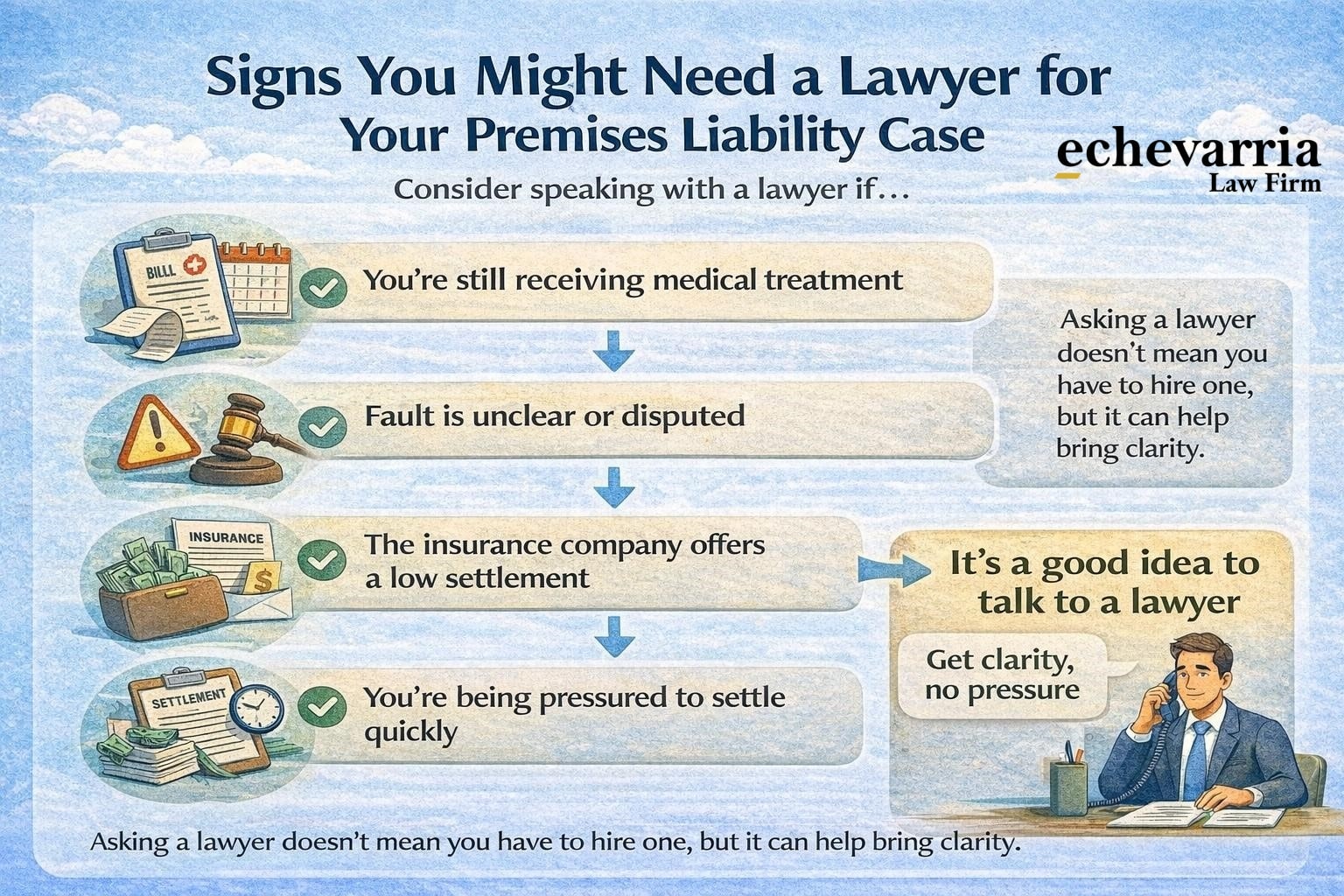
In many situations, legal guidance makes a meaningful difference. You typically want to speak with a lawyer if:
- Your injuries required ongoing medical treatment
- You missed work or expect long-term limitations
- The property owner or insurer disputes fault
- The injury occurred at a business, apartment complex, or rental property
- You’re being pressured to settle quickly
- Multiple parties or insurance policies may be involved
Claims involving unsafe conditions often overlap with property damage issues and insurance disputes, which adds another layer of complexity.
In these cases, handling everything alone can quietly reduce the value of a valid claim.
When You May Not Need a Lawyer
Not every premises liability case requires legal representation, and being honest about that matters.
You may be able to handle the situation yourself if:
- Injuries were minor and resolved quickly
- Liability is clear and undisputed
- The insurance company offers fair compensation promptly
- There are no ongoing medical or financial concerns
A reputable lawyer will tell you when legal help isn’t necessary. Sometimes, peace of mind comes from confirming that you’re already on the right track.
What a Premises Liability Lawyer Actually Does for Your Case
A lawyer’s value isn’t just paperwork or court filings. In premises liability cases, it’s about protection and clarity.
An experienced attorney can:
- Preserve and gather time-sensitive evidence
- Identify all responsible parties—not just the obvious one
- Accurately calculate damages, including future care and lost income
- Handle insurance communications and negotiation
- Prevent mistakes that can permanently weaken a claim
This support allows injured people to focus on healing rather than managing deadlines, adjusters, and legal strategy.
How Much Does Hiring a Lawyer Cost—and Is It Worth It?
Most premises liability cases are handled on a contingency fee basis, meaning:
- No upfront legal fees
- Fees are only paid if compensation is recovered
You can learn more about how this works on our contingency fee page.
The real cost question isn’t just the fee—it’s whether an underpaid settlement leaves you covering future medical care or lost income out of pocket. In many cases, proper representation offsets the fee by securing compensation people wouldn’t recover on their own.
A Simple Way to Decide If You Should Talk to a Lawyer
If you’re still unsure, ask yourself:
- Am I still receiving medical care?
- Do I feel uncertain about who’s responsible?
- Is the insurance company minimizing my injury?
- Am I being asked to settle before I fully understand my situation?
If you answered “yes” to any of these, a conversation with a lawyer can bring clarity—even if you ultimately decide not to move forward.
Frequently Asked Questions
Do I need a lawyer for a slip and fall on private property?
It depends on the severity of injuries, the condition involved, and whether responsibility is disputed.
Can I handle a premises liability claim myself?
Some minor claims can be handled without a lawyer, but more complex cases often benefit from guidance.
Will hiring a lawyer slow down my case?
Not usually. In many situations, it prevents delays caused by missing evidence or insurer pushback.
What if the property owner denies responsibility?
That’s common. These cases often require evidence showing what the owner knew or should have known.
Does talking to a lawyer mean I’m filing a lawsuit?
No. A consultation is about understanding your options, not committing to litigation.
Get Clarity Before You Decide
Premises liability cases aren’t about being litigious—they’re about accountability and safety. Knowing whether you need a lawyer shouldn’t add stress during recovery.
If you’d like to talk through your situation, call (305) 707-3991 or reach out through our contact page for a free consultation. Sometimes the most valuable step is simply getting clear answers before important decisions are made.