


Miami’s intersections see heavy traffic, fast merges, and constant tourist activity. These conditions make certain areas far more collision-prone than others. Knowing where these risks exist helps drivers stay alert and avoid preventable crashes. For information on how these collision patterns affect injury claims, review the firm’s car accident insights.
Why Some Miami Intersections Are More Dangerous Than Others
Certain features consistently increase crash rates across the city:
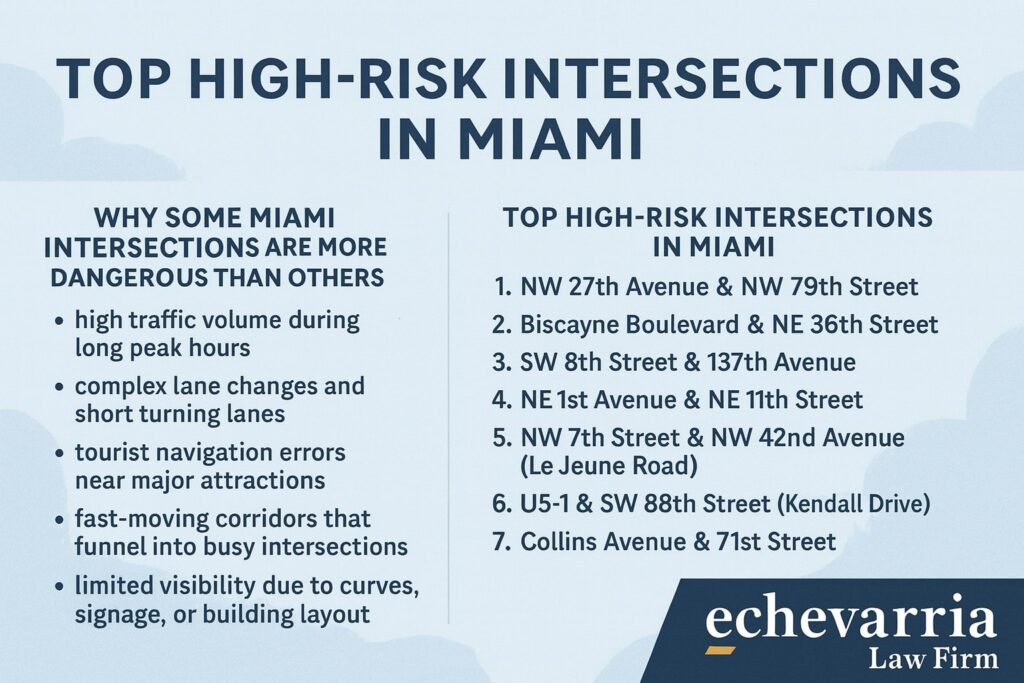
- high traffic volume during long peak hours
- complex lane changes and short turning lanes
- tourist navigation errors near major attractions
- fast-moving corridors that funnel into busy intersections
- limited visibility due to curves, signage, or building layout
These patterns appear throughout local Miami roads, especially in areas with dense commercial and residential mix.
Top High-Risk Intersections in Miami
Below are some of the most consistently dangerous intersections based on traffic volume, design challenges, and collision trends.
1. NW 27th Avenue & NW 79th Street
Heavy congestion and frequent left-turn attempts make this intersection unpredictable. Multiple bus routes and commercial traffic add to the risk, especially during evening rush hours.
2. Biscayne Boulevard & NE 36th Street
Tourists, rideshares, and local drivers all converge here. Sudden lane changes near the bridge approaches contribute to rear-end and side-impact collisions.
3. SW 8th Street & 137th Avenue
High-speed traffic meets dense retail entrances, creating competing movements in a tight area. Drivers often misjudge timing when turning across opposing lanes.
4. NE 1st Avenue & NE 11th Street
This downtown corridor sees intense nighttime activity. Pedestrians, cyclists, and rideshare pickups make sightlines challenging and increase multi-party collisions.
5. NW 7th Street & NW 42nd Avenue (Le Jeune Road)
Traffic traveling to and from the airport adds constant pressure to this intersection. Lane merges, quick turns, and unfamiliar drivers create frequent risks.
6. US-1 & SW 88th Street (Kendall Drive)
A major commuter route with heavy left-turn volumes. High speeds on US-1 combine with short signal cycles, leading to elevated crash rates.
7. Collins Avenue & 71st Street
Beach traffic, narrow lanes, and a high volume of tourists make this area especially complex. Pedestrian activity adds another layer of caution.
How to Reduce Risk When Driving These Areas
Small adjustments can make high-risk intersections safer:
- slow slightly before entering the intersection
- avoid last-second lane changes
- leave extra following distance
- use turn signals early
- watch for pedestrians and cyclists near curbs
- avoid relying solely on navigation instructions in complex areas
Familiarity helps, but even experienced Miami drivers benefit from taking these steps.
What to Do If You’re Hurt at One of These Intersections
After a collision, your health and documentation should come first:
- seek medical evaluation promptly
- record the intersection name and nearby landmarks
- take photos of signal lights, traffic patterns, and vehicle positions
- gather contact information from witnesses
- avoid detailed statements to insurers until you understand your injuries
- keep copies of medical records and receipts
These details become important when insurers review how the collision occurred and who may be responsible.
If You Were Involved in a Crash at a High-Risk Intersection, We Can Help Protect Your Rights
If you’re unsure about next steps or dealing with insurance questions, Echevarria Legal can guide you through the process and help protect your interests. Call us now at 305.707.3991 or contact us to request a free consultation.