

Rideshare insurance is one of the most confusing parts of being in an Uber or Lyft accident. Passengers rarely know which insurance policy applies, who pays medical bills, or how “trip status” affects coverage. This guide breaks down rideshare accident evaluations process in plain language.
What to Do Immediately After the Crash
Follow the same safety steps you would in any collision, but pay close attention to the rideshare details.
- Check for injuries and call 911 if anyone is hurt.
- Document the rideshare app screen at the moment of the crash (driver name, license plate, trip status, route).
- Report the accident in the Uber or Lyft app, but keep your description simple.
- Get medical attention as soon as possible, even if symptoms feel mild.
- Avoid detailed statements to any insurer until you understand the coverage.
Many of these steps mirror what’s recommended in any Florida car accident, but the rideshare layers make careful documentation especially important. See how car accident claims are evaluated.
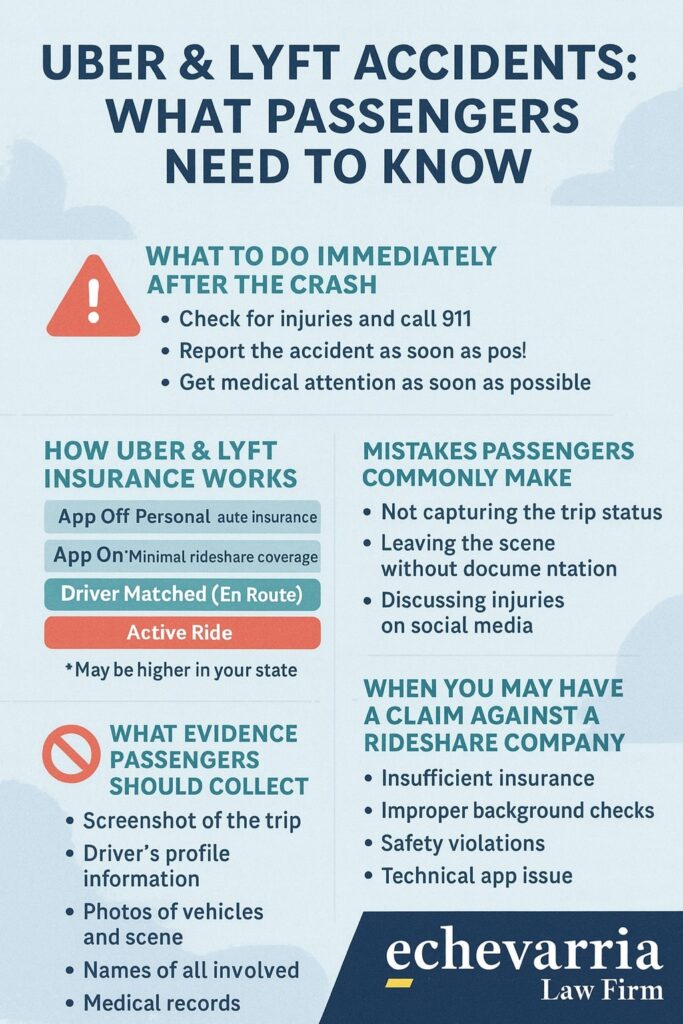
How Uber & Lyft Insurance Works
Rideshare coverage changes based on what the driver was doing at the exact moment of the crash. Here’s the simple version:
1. App Off (Driver Not Working)
If the driver is offline, their personal auto insurance applies. Uber and Lyft are not involved.
2. App On — Waiting for a Ride Request
Coverage increases, but only slightly. Uber and Lyft offer contingent liability coverage, which may apply if the driver’s personal policy denies or limits coverage.
3. Driver Matched With a Passenger (En Route to Pickup)
The rideshare company’s higher commercial liability policy becomes active. Coverage typically increases significantly compared to stage 2.
4. Active Ride (Passenger in the Car)
This is the strongest coverage stage. Uber and Lyft provide their full commercial policy, which usually includes:
- Third-party liability
- Uninsured/underinsured motorist coverage
- Contingent collision coverage for the driver
As a passenger, this phase offers the clearest protection.
Mistakes Passengers Commonly Make
Passengers often unintentionally weaken their claims by:
- Not capturing the trip status within the app
- Leaving the scene too quickly without documenting injuries or property damage
- Relying solely on the rideshare report and not filing a police report
- Waiting days to get medical evaluation
- Discussing injuries on social media
- Giving recorded statements before understanding which insurer is responsible
These mistakes make it easier for insurers to dispute injuries or blame a pre-existing condition.
What Evidence Passengers Should Collect
Passengers are in a unique position because they often have strong documentation built into the app.
Helpful evidence includes:
- Screenshot of the trip (start, stop, route, timestamp)
- The driver’s profile information
- Photos of the vehicles and scene
- Police report number
- Names of all parties involved
- Medical records from the first evaluation after the crash
- Contact information for witnesses
Organizing these materials strengthens your position when dealing with insurers who may dispute liability or injury severity.
When You May Have a Claim Against a Rideshare Company
Most claims involve the driver and the rideshare insurance policy—not the rideshare company directly. However, there are situations where the rideshare company’s conduct becomes relevant, such as:
- failure to maintain adequate insurance during the trip
- negligent hiring or background check issues
- safety violations or improper driver vetting
- a technical issue with the app contributing to the crash
These situations are less common, but they do exist. A lawyer can evaluate whether the facts fit the criteria for a rideshare company claim.
If You Were Hurt as a Rideshare Passenger, We Can Help You Navigate the Insurance Process
If you’re unsure which insurer is responsible or what your next step should be, Echevarria Legal can walk you through your options and help protect your rights from the start. Call us now at 305.707.3991 or contact us to request a free consultation.